
A support manager wants an AI assistant to organize incoming files, check a customer portal, and finish a report before the morning meeting. A developer wants the same assistant to run through a self-managed gateway, use selected models, and call tools across several devices. Both are plausible jobs for an agent, but they put responsibility in different places. The useful question behind Claude Cowork vs OpenClaw is who should manage the tools, credentials, and failures once the first impressive demonstration is over.
The choice starts with the person who will maintain it
Cowork is designed around giving Claude a task and reviewing what it produces. OpenClaw offers an agent environment that an operator installs and configures. Neither approach is automatically better for a company that wants to save time. If nobody has time to patch a gateway or investigate a broken connector, the flexibility of a self-managed setup can turn into another responsibility. On the other hand, a developer who needs control over model providers, tool routing, and devices may find a managed workspace too restrictive.
Consider the reporting task again. Its owner cares about the finished spreadsheet and whether its numbers are right; they probably do not want to maintain a server. The developer might care more about how the spreadsheet was created, where the agent runs, and whether the same automation can be reused inside a different assistant. Those priorities should shape the purchase before feature counts do.
Cowork gives people a managed place to delegate work
Anthropic describes Cowork as a way to complete multi-step tasks involving documents, files, research, and other permitted resources. Availability and specific computer or browser access depend on the user's plan, account configuration, and environment. That is useful for a team that wants to stay focused on deliverables rather than assembling an agent runtime.
External connections can extend what Cowork can reach. Anthropic supports custom remote MCP connectors in Cowork, but a connector only gives access to the tools and permissions that have actually been configured. When the task requires a particular computer, Noxgild can connect supported Claude clients to an authorized device so that the assistant works with permitted files, commands, and other computer capabilities. Teams interested in keeping Claude as their assistant can connect Claude rather than assume they must replace it with another agent platform. The exact Cowork-to-Noxgild combination should still be tested in the intended account before anyone promises a production workflow.
This distinction matters in a real office. Producing an outline in a managed workspace is one task; running an approved command on an employee's workstation is another. The second requires a known target machine, an authorized identity, and a check that the command affected the intended device.
OpenClaw puts more of the agent system in your hands
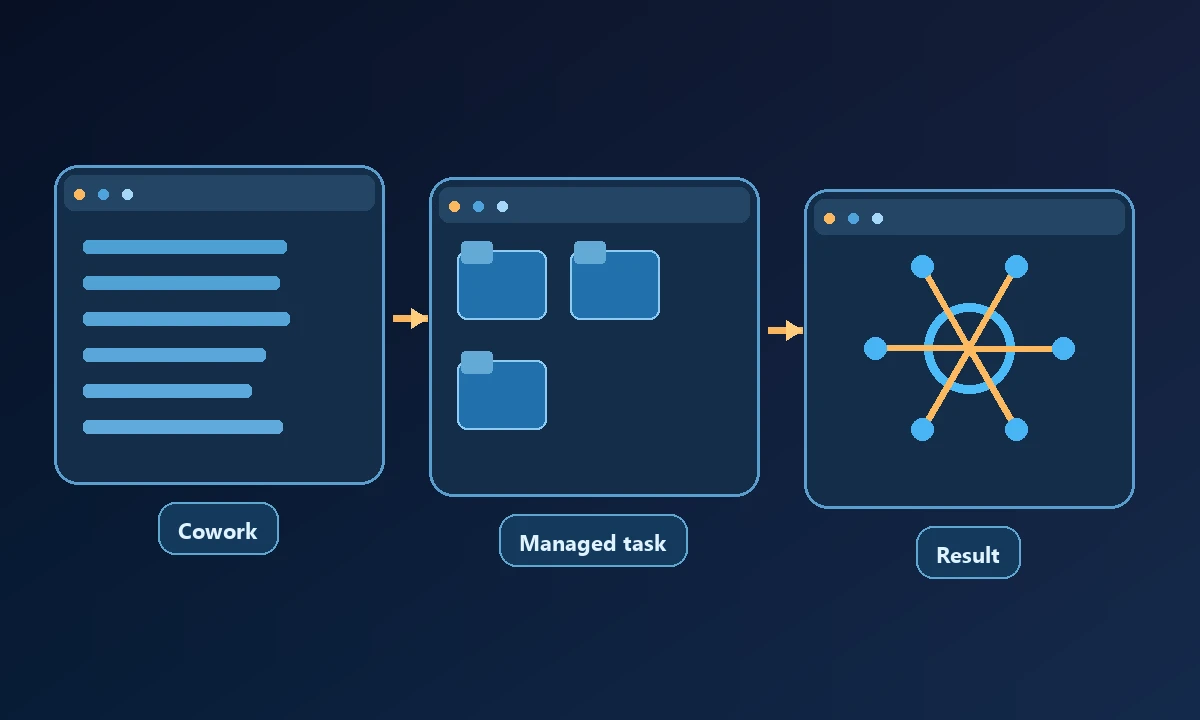
OpenClaw uses a gateway to coordinate sessions, channels, agent tools, and connected nodes. The operator chooses the environment and is responsible for configuration, updates, credentials, and the way external tools are exposed. For a technical team, that level of control can be valuable. A customized workflow may need several models or a messaging channel that a managed workspace does not offer.
The maintenance cost is real, even if the software itself is open source. Someone must decide which tools a session can call, rotate secrets, monitor failures, and recover when a node is offline. A gateway can be online while a remote device is unavailable; treating those as the same health check makes troubleshooting harder.
If most of your day involves maintaining infrastructure already, this may be a reasonable trade. If the expected outcome is simply a reliable report for a nontechnical colleague, the extra ownership needs a compelling reason.
Where a separate computer connection becomes useful
A browser-based task can look complete until it reaches a local application. Imagine the agent downloads an invoice, then needs to inspect a file in an approved directory and run a Windows accounting program. The missing component is no longer a smarter comparison between Cowork and OpenClaw. It is a safe route to the actual computer where the work must happen.
Noxgild supplies that route through its authorized computer control. The customer benefit is concrete: the assistant can use approved machine capabilities on a designated online device without pretending those applications exist inside a cloud workspace. The owner still controls access, and individual tools remain subject to device and workspace limits.
Browser sessions introduce another boundary. A website signed in on the owner's machine is not automatically signed in within a cloud browser or a self-hosted agent's new profile. When the job depends on a permitted existing session, Noxgild's option to work in an authorized browser session addresses a different need from running a new browser somewhere else.
For a team that deliberately wants an isolated environment, cloud browser automation can be appropriate instead. Keeping these execution modes distinct makes it easier to understand where credentials live and what evidence a completed task can provide.
Security changes the decision more than the product label
The practical risk is not whether an agent is called managed or self-hosted. It is what the agent can see and change. A managed assistant can still be given overly broad access; a privately hosted gateway can still expose a dangerous tool. Start with read-only operations, confirm the targeted device, and require explicit review for sensitive changes.
The latest Model Context Protocol specification describes how clients and servers exchange tool calls, not a blanket authorization to operate a company's machines. Noxgild's computer-connection safety walkthrough is relevant when the workflow moves from generating documents into acting on a real device.
For the reporting team, an effective approval rule might be simple: downloading a public document is routine; changing a customer record requires a person to approve it. Whichever agent you choose, test that rule rather than trusting a security slogan.
Make the decision with one complete, low-risk task
Give Cowork and OpenClaw the same non-sensitive deliverable. Ask each to read a folder of sample inputs, produce a summary, and identify which source files supported the answer. Then repeat the job with one missing input and one expired session. A good result is not merely a success message. It is a correct artifact, a comprehensible record of what happened, and a recovery path when something goes wrong.
Choose Cowork if the team values managed delegation and its supported connections already reach the work. Choose OpenClaw if the team needs a configurable agent gateway and has the skills to operate it. If either choice needs to control a specific remote computer, evaluate that access separately. Our comparison of AI computer-control tools can help frame which execution layer belongs in the stack.
You do not need to replace a useful assistant just because the next task lives on another computer. You need to establish which assistant does the reasoning, which tool reaches the device, and who is accountable for the result.