
OpenClaw vs Noxgild is not a simple competition between two identical assistants. OpenClaw is a self-managed agent and gateway ecosystem that can connect models, messaging interfaces, browser control and remote nodes. Noxgild is a controlled execution bridge that lets compatible AI clients operate specifically authorized computers. Choosing between them starts with deciding who should own the agent and who should operate the machine.
Short answer: pick the layer you need
Choose OpenClaw when you want to run and customize the agent environment itself and accept responsibility for its gateway, models, plugins, connectivity and hardening. Choose Noxgild when you already have an AI client and need to connect it to a real authorized computer through machine, browser and desktop tools with a managed identity/control plane.
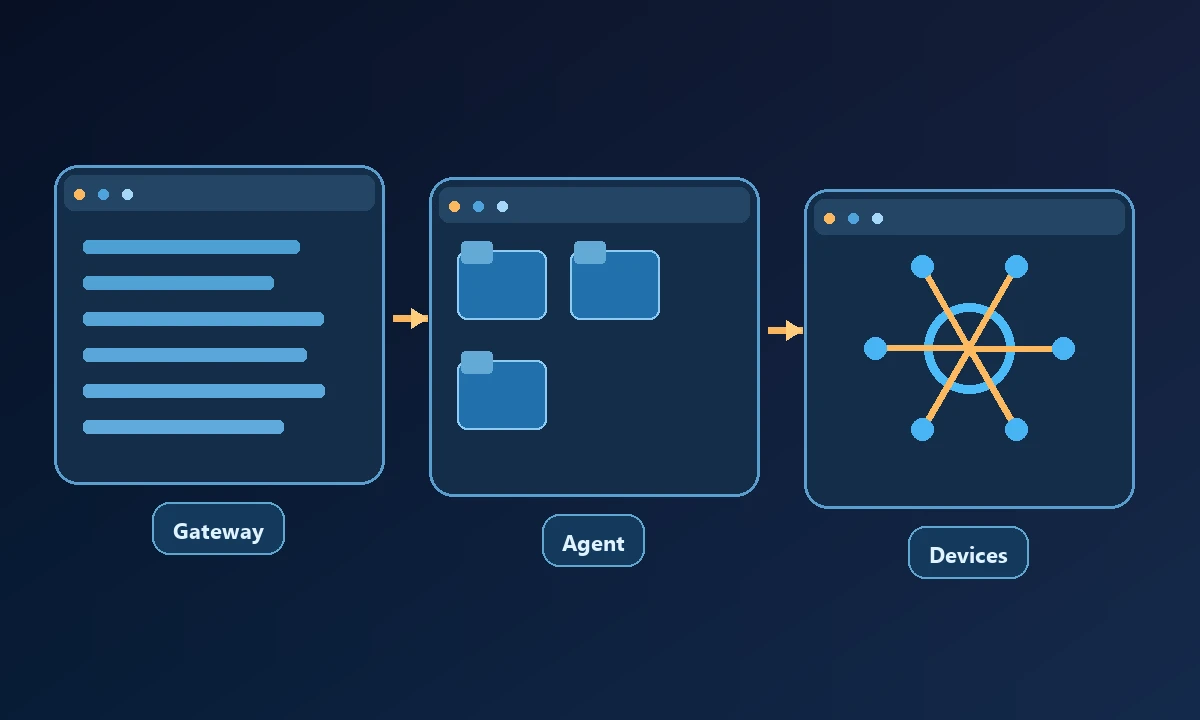
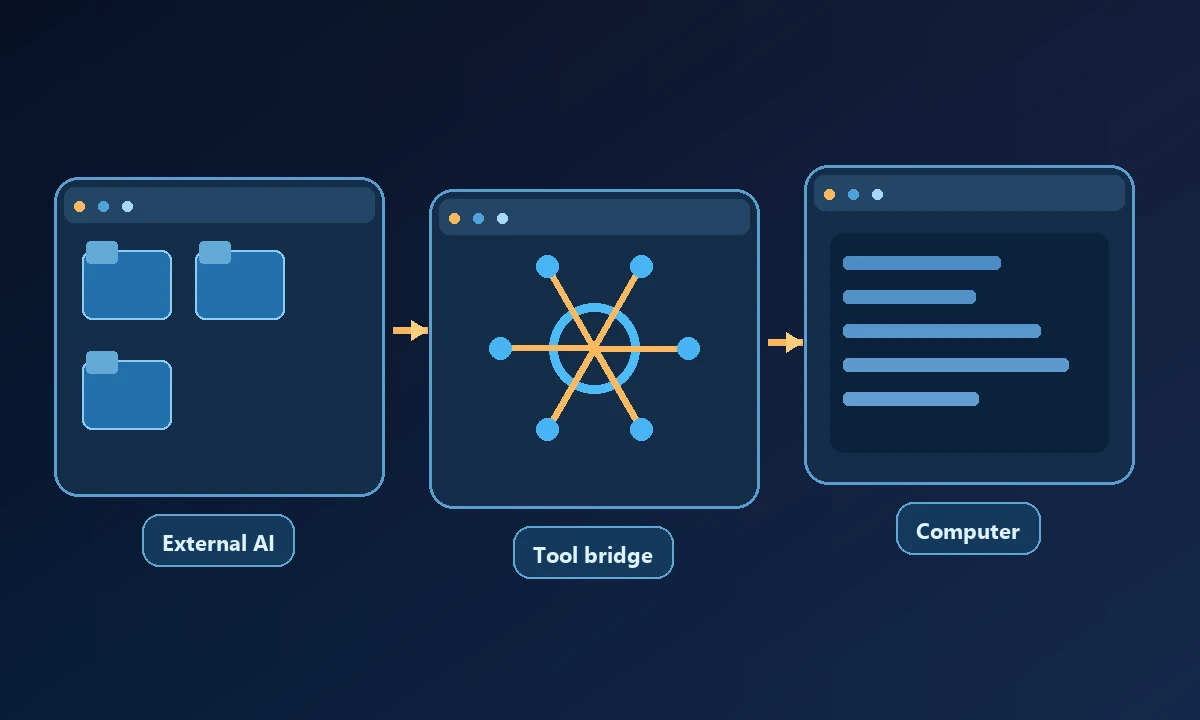
They can also be complementary in an architecture if the client and MCP configuration are compatible. That should be validated, not assumed from a diagram.
How the architectures differ
| Question | OpenClaw | Noxgild |
A technical founder might already have an OpenClaw gateway coordinating messages, browser sessions and tools. Replacing the gateway simply because one task needs a Windows workstation would confuse the agent's responsibilities with the environment where work happens. The Cowork alternatives comparison introduces that same distinction from a managed-workspace perspective: who plans the task and who performs an operation on a real device do not have to be the same product.
| What is the central product? | An agent gateway and configurable assistant environment | Remote authorized computer execution layer |
| Where does reasoning come from? | Connected models and configured agent runtime | The user's external compatible AI client |
| Browser control | Local gateway browser, remote node host or CDP attachment | Workstation browser worker plus separate hosted Cloud Browser |
| Real machine operations | Agent/node/tool configurations, governed by deployment | Curated machine, browser, desktop capabilities on authorized devices |
| Who operates infrastructure? | Typically the OpenClaw operator | Noxgild cloud control plane plus user's connected device |
| Security tasks | Gateway network, credentials, tools, updates, allowlists | Account/device authorization, exact-command approval and worker trust boundaries |
This is a documentation-based product comparison, not a claim that we installed both on identical infrastructure and timed their execution.
Costs: subscription is only one line item
OpenClaw's software may be self-hosted, but a real deployment still needs model requests, compute, secure network access, backup/updates, and the time of whoever operates it. The exact cost depends on which models and hosting choices you make. Noxgild currently advertises a Free plan with 10,000 normal tool calls per 30-day cycle and Pro at $20 monthly with hosted browser allowance.
If you already maintain a secure agent gateway and have staff to administer it, self-hosting might be economically attractive. If your team only needs an assistant to reach a few QA desktops, operating an entire agent infrastructure could be extra work.
Where OpenClaw is stronger
OpenClaw offers substantial flexibility for people who want to define the agent's behavior, choose its model stack, build tools, connect communication channels or run self-managed automation. Its browser documentation explains the distinctions between gateway-local control, a remote node host and remote CDP. That is more than a simple “local browser only” setup.
Such flexibility is most valuable to technically equipped teams. Someone seeking a turnkey authorization boundary for existing AI tools should include the ongoing gateway maintenance in the comparison.
Where Noxgild is stronger for a particular job
Noxgild can operate an enrolled, authorized computer from a supported AI client. Its value is not another general-purpose agent personality; it is access to named machine, file, browser and desktop operations when the operator permits them. In a Windows-only accounting workflow, automating the installed application could resolve the missing execution step while a separate agent remains responsible for planning. The operator must still authorize the correct device and inspect the result.
Noxgild centers on selecting an authorized physical or virtual computer and routing specific capabilities to it. Its machine/browser/desktop catalog and device targeting matter when an agent needs to operate an existing installed app and its browser, not create a new personal assistant.
To compare the approaches, follow one harmless end-to-end workflow and record every boundary: assistant, gateway, device identity, allowed command and output. Disable the target machine during a test to see whether the system fails clearly instead of silently taking another route. The computer-access security controls are useful criteria for examining the device side. Choose a self-managed gateway for flexibility and a dedicated device connection only when its computer access is actually needed.
Noxgild also documents browser-content trust boundaries, exact approvals and an UNKNOWN command state for uncertain side effects. Those are relevant control-plane mechanisms; they do not eliminate the underlying risks of giving an AI real local permissions.
Who should choose what
A hobbyist building a personal assistant may enjoy OpenClaw's configurable gateway. A developer operating a persistent multi-channel assistant might prefer the same. An IT team granting multiple approved AI clients access to a specific remote test machine has a more direct match with Noxgild's security and device model.
Before committing, run one reversible command, one authenticated browser action and one real desktop check in the exact environment. Then test offline recovery and revocation. A tool that looks good in architecture diagrams but cannot verify completion is not a finished solution. For a vendor-neutral explanation of tool interfaces, see the MCP standard.