
Browser Use pricing has separate components for browser execution, the decision-making model and transferred data. The public rate for a hosted browser is $0.02 per hour, but that figure alone will seriously underestimate many interactive AI tasks. Calculate the cost of a verified output, including failed attempts.
The published billing components
As of October 25, 2026, Browser Use lists credits starting at $5 and no required subscription for its current pay-as-you-go product. Cloud browsers are listed at $0.02 per browser-hour, billed by the minute with a one-minute minimum. Browser Use Agents charge model-token rates plus a 20% service fee, in addition to the browser and network use.
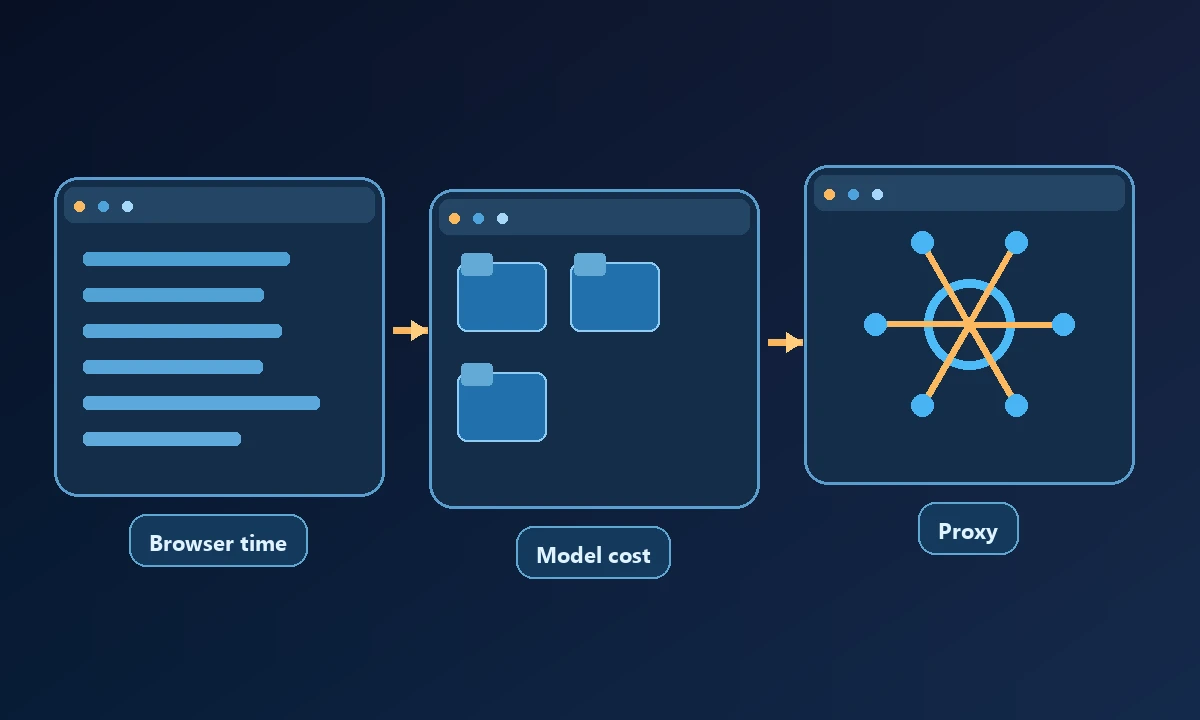
The listed standard residential proxy rate is $5 per gigabyte; its direct or supplied-proxy route is listed at $0.20 per gigabyte, before separate third-party provider charges. All of these are rates from the company's public pricing page, not a guarantee of what a particular run costs.
The browser-hour headline price sounds small until an agent makes several model calls, loads a media-heavy page and retries after an expired login. Cost should be calculated per correctly completed task, not by a single infrastructure unit. The Browser Use versus Skyvern comparison shows why coding style and workflow maintenance can dominate the decision even when both options charge for browser time in different ways.
A twelve-minute task worked through
Imagine a browser agent spends twelve minutes retrieving a document, consuming $0.30 of base model tokens and transferring 0.05 GB through the listed residential proxy. The browser portion is about $0.004, the model portion becomes about $0.36 after the service fee, and proxy usage adds approximately $0.25. The total is around $0.614 before retries or any other fees.
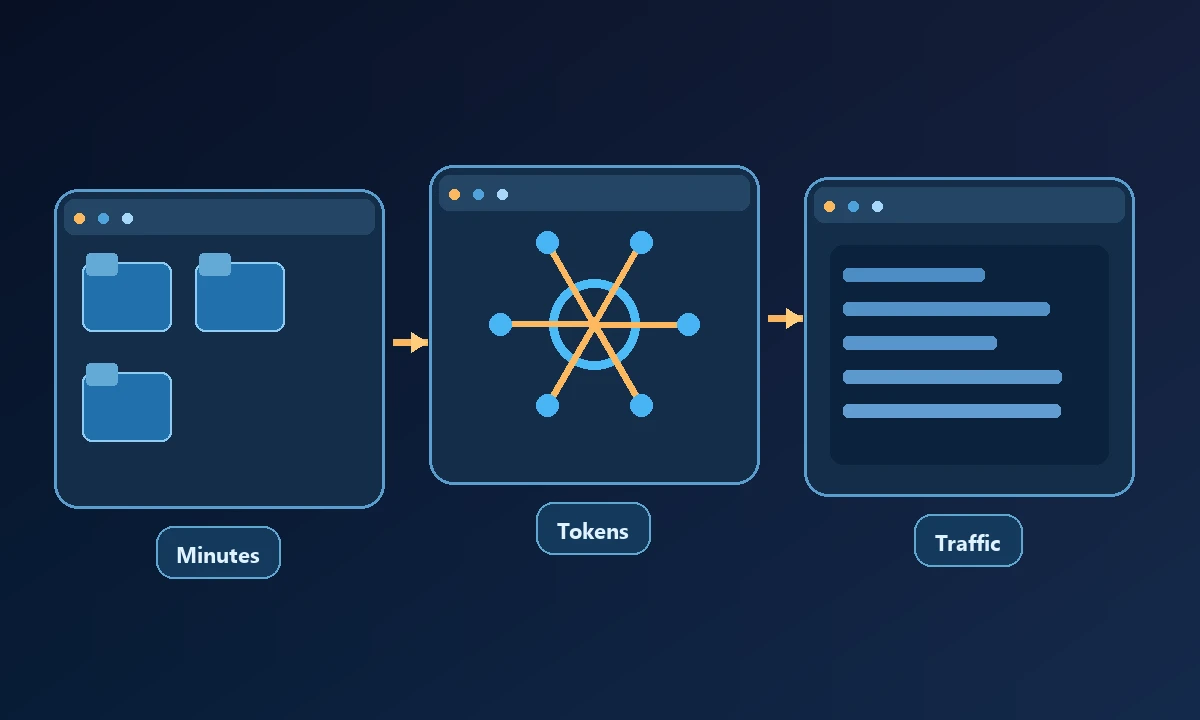
This hypothetical example shows why the browser-hour headline is a small part of some tasks. Run the same job on the same website to learn the actual model and transfer amounts.
Budget for workload shape
A deterministic navigation script may use little inference; a complicated portal may require repeated interpretation of page state. A large number of parallel agents also needs enough concurrency allowance. Separate successful outputs from attempted runs while allocating the cost of retries to the outputs they eventually produce.
For websites that do not depend on an employee's logged-in workstation, Noxgild's separate cloud browser may fit the execution environment. If the job requires the browser profile already authorized on a particular device, the signed-in browser option changes the operational requirements entirely. Its value is preserving the right account context, not guaranteeing a cheaper browser-hour rate. Price the complete workflow with the correct environment attached.
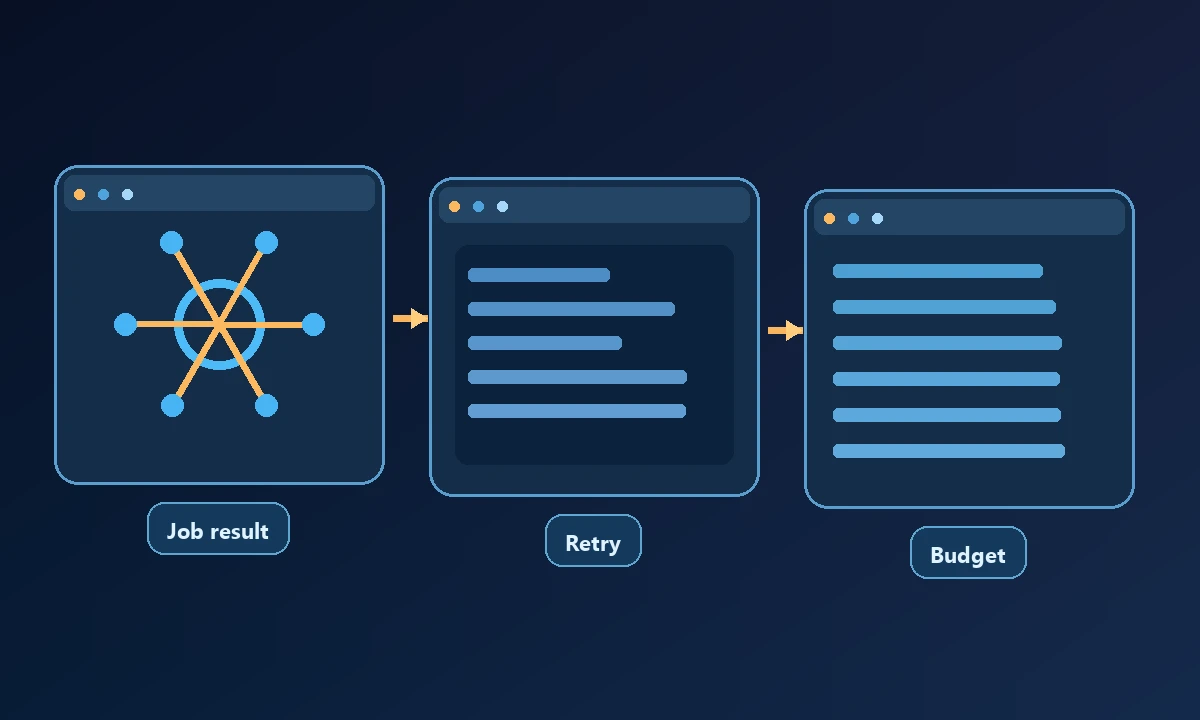
Track browser minutes, model-token charges, proxy bytes, number of attempts and verified completions. Do not divide the bill by every attempted run and call it cost per success.
Free credits and self-hosting
Introductory credits are useful for a pilot, not for forecasting ongoing spend. The company also publishes concurrency levels influenced by lifetime project spend; confirm the current limits. The open-source library can run with separately supplied infrastructure, which changes the cost model to local compute, model fees, maintenance and network charges.
What to price alongside it
Skyvern counts credits and Browserbase plans package browser hours. These meters are not interchangeable. Test the same task under the same authentication constraints. Use the NIST AI Risk Management Framework as a reminder to include reliability and monitoring, not just rates.
Measure five representative tasks. Record browser duration, model tokens, network or proxy use, retries, and the independent proof of completion. Then estimate the maintenance time when a supplier portal changes. The computer-control product is worth including only for workflows that actually touch a named machine. An apparent savings disappears quickly if a worker cannot reach the account or application required to finish the task.
When the job goes beyond a browser
For ten test runs, record the total cost, minutes and evidence of correct outputs. Multiply the measured cost per verified completion by expected volume, with headroom for retries and session expiration.