
The best OpenClaw alternatives depend on what you mean by managing multiple computers. OpenClaw is an open-source agent gateway with messaging channels, configurable skills and a model-driven action loop. It also has node and multi-device concepts, but that is not identical to operating a fleet of company workstations with endpoint management, native desktop access and auditable permissions.
What OpenClaw already handles
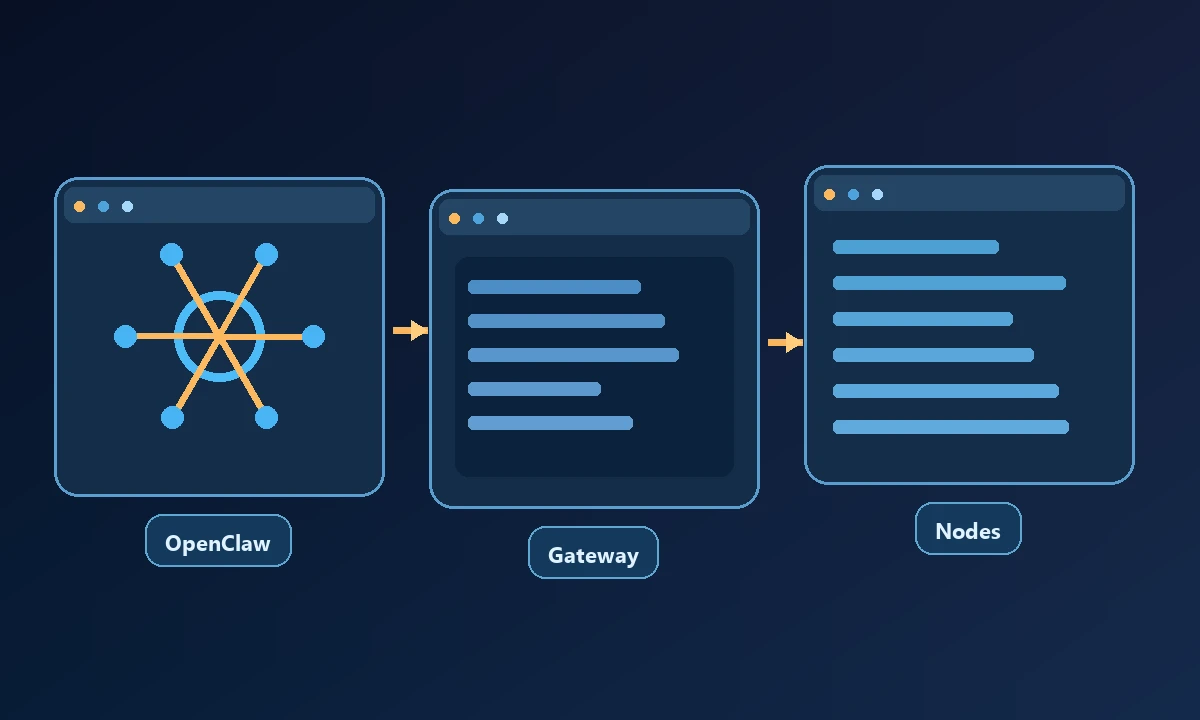
OpenClaw's current documentation emphasizes a central Gateway, messaging channels, model/provider selection and connected nodes. A technical operator can customize workflows and integrate local or remote resources. That flexibility is valuable when a team is comfortable running and securing the infrastructure. It also means device enrollment, updates, connected secrets and policies require real operational attention.
An OpenClaw user may want to simplify maintenance, not change the underlying assistant. If the team operates several Windows machines, the important question is whether the replacement handles device identity, authorization and recovery as well as agent messaging. The OpenClaw versus Noxgild analysis helps distinguish a self-managed gateway from a dedicated connection to an actual device.
Alternatives organized by the actual job
Noxgild focuses on connecting AI clients to authorized computers through a device-aware machine, file, browser and desktop tool interface. It is a candidate when the assistant must act on a named workstation and verify the outcome, rather than when the requirement is a messaging bot with broad channel integrations.
MeshCentral serves remote device administration. It may offer practical device access and management functions to administrators, but it is not primarily a conversational agent platform. A team combining it with AI would need an appropriate integration and approval design.
Microsoft Intune or traditional endpoint management can be a better fit for standard configuration and fleet policy. They provide management infrastructure rather than a general assistant attached to every browser window. The choice can be correct even if no "AI agent" appears in the product name.
n8n and Activepieces orchestrate workflows across APIs and connected services. They can be useful when the work happens inside business systems rather than a specific desktop session. Running them does not inherently make an installed Windows app reachable.
Claude Cowork and other supported agent workspaces may reduce effort on document and connected-app tasks. Availability of a given local or remote computer-control surface must be checked separately from their general agent capabilities.
Open Interpreter is another open-source route for agent-driven coding and command execution. It is well suited to experimentation on controlled environments, though multi-device management is not necessarily a turnkey feature of a terminal agent.
Compare the operational boundary
A buyer should ask which system owns the device inventory, what identifies the target of a command, who can approve writes, how credentials are protected and whether failed commands are surfaced. The MCP architecture can standardize tool discovery, but it does not eliminate device management or incident response.
List the actual operations performed across the fleet and the permissions each requires. Try an offline workstation, a denied command and a successful read without elevating privileges. Review remote-access security controls before assigning more than one machine to an automated workflow. The useful replacement is the one that reduces maintenance while retaining a clear and testable account of which device was affected.
When Noxgild is a reasonable alternative
Noxgild can operate authorized enrolled computers through permitted machine, file and desktop capabilities. That addresses the execution side of multi-computer work but does not replace a general agent gateway's channels, models or orchestration rules. For staff who need to diagnose individual workstations, remote IT-support workflows provide the more relevant test case: can the operator identify the target and prove that the right command ran there?
Run the same reversible task across two named computers and record the actual device identities, failures and final results. That test reveals more than a comparison of the number of available plugins.