AI computer automation software vs traditional RPA is not a choice between intelligent work and outdated scripts. Robotic process automation is useful when the same structured steps must run predictably. AI-driven computer automation becomes interesting when the inputs, screens or decisions are variable. An organization may need both, with a firm boundary between what a model decides and what a deterministic workflow executes.
First classify the work
Consider a finance team downloading invoices. If the site layout, credential process and file naming remain stable, a script or RPA bot can execute a repeatable job with little ambiguity. Now consider an employee resolving a new support ticket that requires reading unfamiliar diagnostic messages, deciding which logs matter and comparing several possible causes. An AI assistant can help interpret the situation, but it still needs tools and approval to operate a real system.
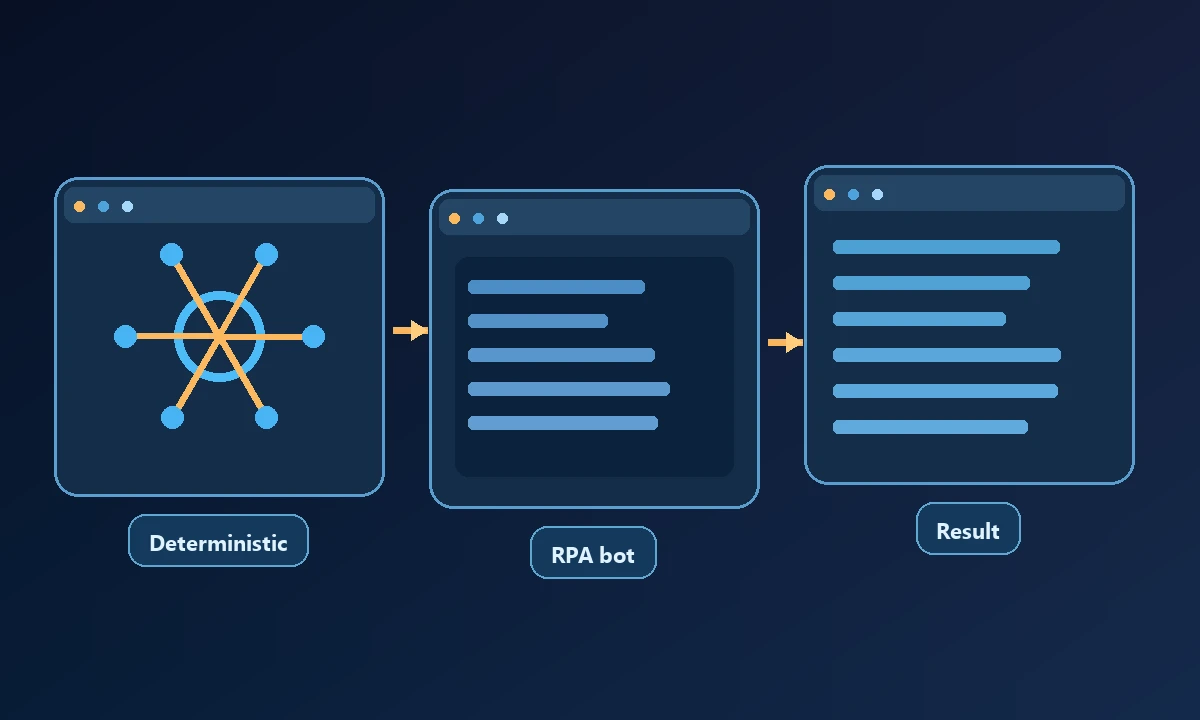
The important cost is not the number of clicks. It is the time required to maintain, recover and verify the workflow, especially when something changes halfway through.
A billing department needs to copy six values from a predictable form every day. Traditional RPA may be appropriate because each field and validation rule is known. The problem changes when the form layout moves or a technician must inspect a screenshot and decide what failed. Our browser automation tool comparison is useful for that second case, but an AI agent should still be judged by completed outcomes rather than its ability to improvise a click.
Where traditional RPA earns its place
RPA works well for predictable transaction flows: opening a known application, moving data between defined fields, generating a standard report or performing a batch operation under documented rules. The steps can be tested and reviewed. Its limitations arise when unstructured input, ambiguous exceptions or frequent interface changes require a person to redesign the flow.
Stable automation should not be replaced just because a new model can imitate the steps. Every added reasoning layer introduces variability, model cost and questions about reproducibility.
Where AI computer control helps
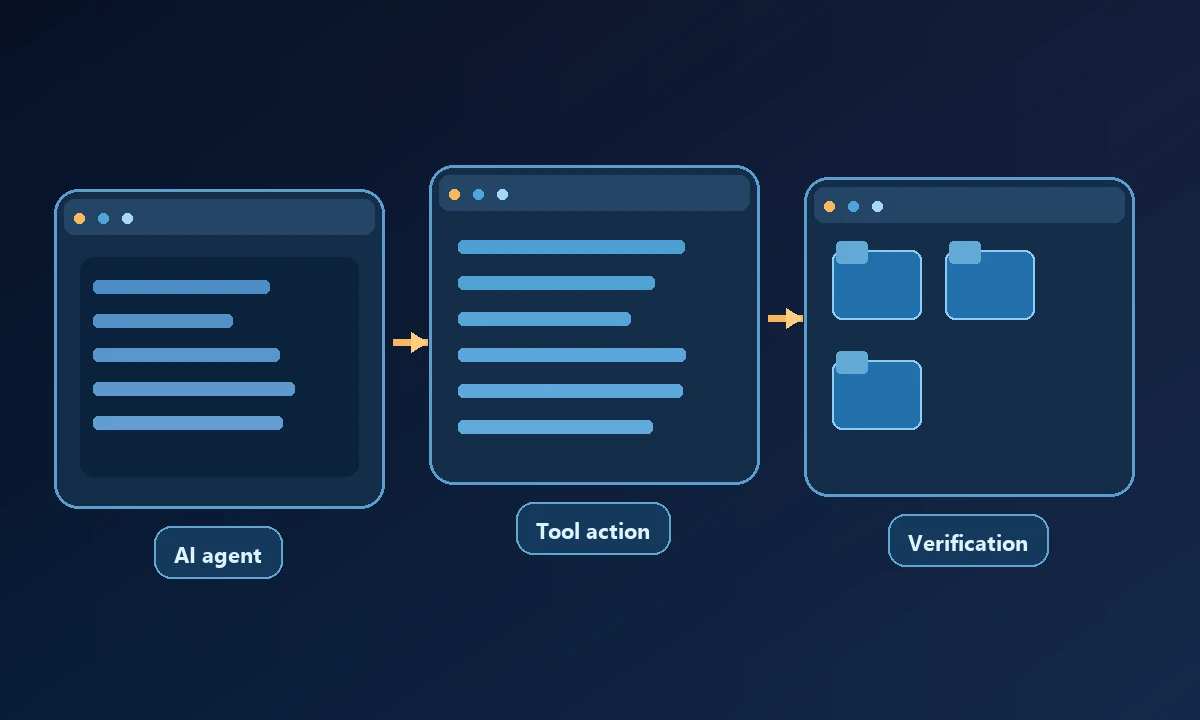
AI-assisted workflows can interpret instructions, inspect changing states and choose among permitted operations. They can be useful for research, troubleshooting and tasks that mix browser, files and native desktop controls. But a model's explanation of an operation is not evidence that the operating system completed it. Successful automation should return actual tool responses and independently check the final state.
If the job eventually reaches a Windows desktop application, Noxgild can operate the authorized Windows program through enabled native controls on the target machine. That capability supplements, rather than replaces, a deterministic RPA workflow when the scripted steps already work. For the web portion, browser automation in an isolated session may help where saved workstation context is not needed. Choose the two layers separately instead of assuming one agent should control everything.
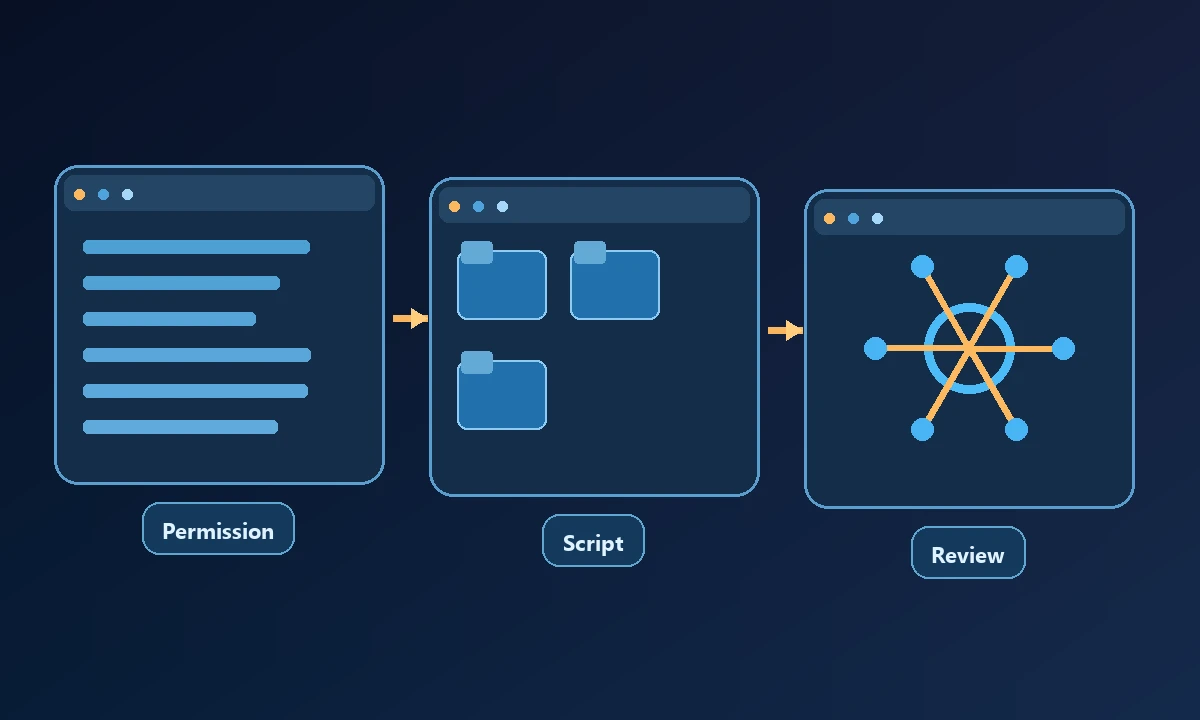
Security matters most when the model may choose which command to run. Sensitive or irreversible operations should require an appropriate approval and a restricted execution account. The NIST least-privilege guidance is a useful baseline regardless of whether the operator is an RPA bot or an AI agent.
What a hybrid workflow looks like
A sensible hybrid system can let AI read an ambiguous ticket, extract structured facts and propose a known repair procedure. A deterministic script then runs only the approved operation and returns a machine-readable result. The assistant checks the evidence, communicates the outcome and escalates if the process fails.
Build a side-by-side test with a clean input, one changed field and one deliberate error. Count verified outputs, human interventions and risky retries. The device security boundaries become especially relevant if the automation can alter real customer accounts. A hybrid can be cheaper and safer than a universal AI approach: fixed rules handle predictable work, while AI interprets the exceptional state and requests approval when needed.
This architecture avoids asking a model to improvise destructive shell commands when a narrow tested script already exists. It also avoids forcing a brittle script to interpret unstructured technical reports it was never designed to handle.
A buying test based on outcomes
Price the full lifecycle: integration, licenses, operations, failed runs, audit, employee review and recovery. Ask whether the vendor's AI agent can distinguish a failed command from a completed task and whether its tool scope can be limited to a named device. A generic promise of "zero-click automation" is not a substitute for these controls.